


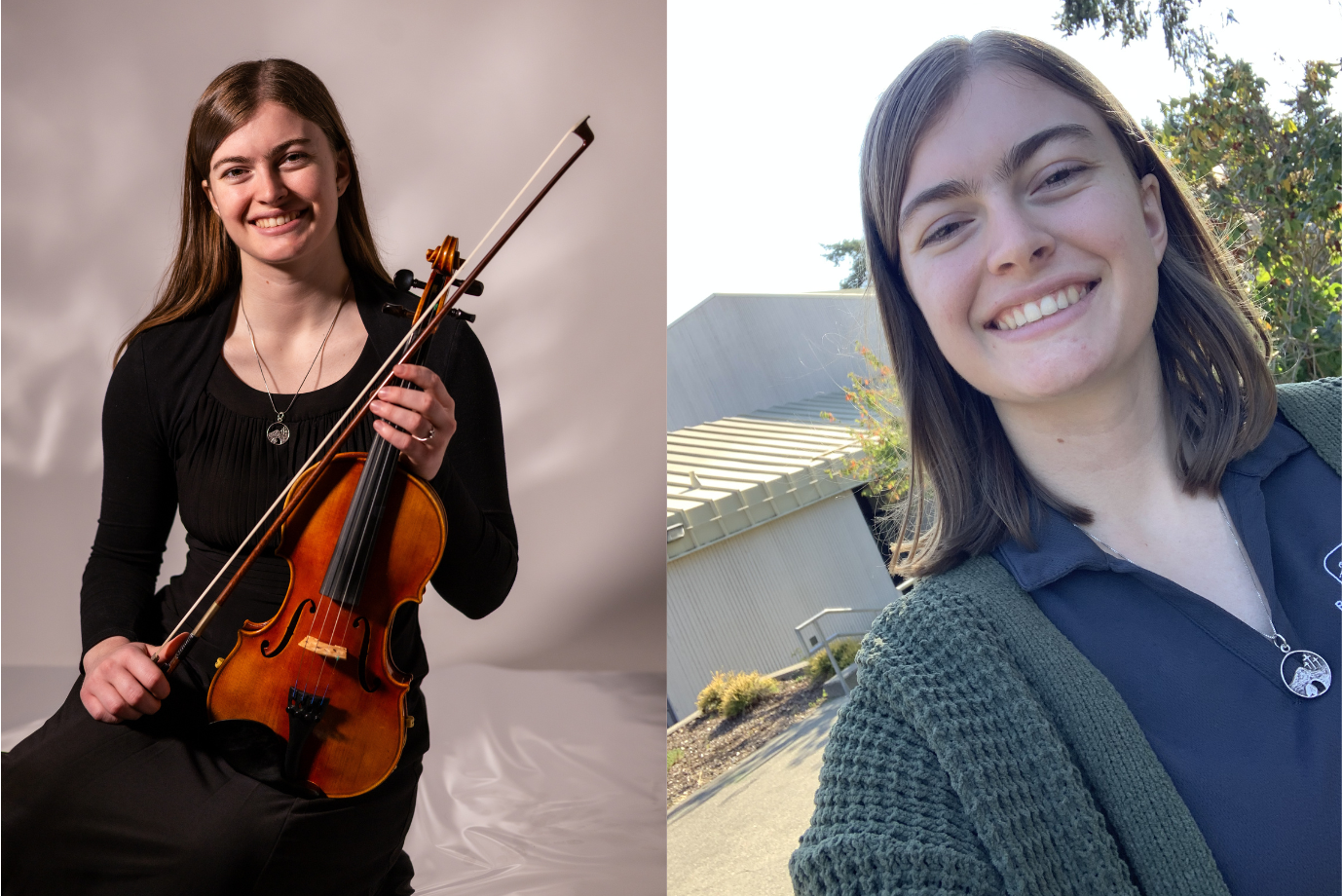
Lea is a second-year student at Corban University studying intercultural education. She is originally from Washington State, grew up in a military family, and has already lived more cross-culturally than most people twice her age: a gap year in Papua New Guinea, coasts crossed, cultures navigated.
When Dawnita, IFI Salem leader, came to speak at one of her classes about IFI, it felt like a natural next step.
But natural didn’t mean easy.
“I didn’t know how this was going to go,” Lea admitted. “I asked myself tons of questions, like how do I actually build a real friendship with someone from a completely different background?”
She had the heart for it, though. Her intercultural classes had given her language for what she’d experienced in PNG, and she felt a calling toward overseas work.
But she was also honest with herself: wanting to serve internationally someday doesn’t mean you automatically know how to do it well right now. IFI felt like a chance to learn.
“I don’t have to wait until I’m abroad,” Lea said. “I can serve now, right where I am.”
Lea connected with IFI in September 2025, and by October, she was at their pizza party, doing icebreakers with a group of Japanese students newly arrived in Salem. It was a little awkward, a little fun, and exactly what was needed to break the ice.
From there, she was assigned to be a “friendship/conversation partner” with two of the Japanese students. They started meeting for coffee, first as a group, then one-on-one. Lea made it her mission to work through every coffee shop in Salem. An hour at a time, one conversation at a time, the friendships slowly deepened.
“The talks have become easier as time goes on,” Lea said. “At first, I wasn’t sure what to say or how to bring things up. But just showing up consistently makes a huge difference.”
She’s been learning as she goes, picking up on different communication styles, understanding that in Japanese culture, for example, saying “no” directly can be uncomfortable, and learning to read between the lines. It’s been an interesting curve, she says, but a worthwhile one.
“We’re vastly different, but we can still be friends. It’s been really cool to see that practically, not just theoretically.”
Finding ways to talk about faith has come more naturally than she expected. Being a student at a Christian college helps; her Bible classes give her an easy way into spiritual conversations. Before winter break, she took one of her Japanese friends to see the winter lights around town, and somewhere along the way, she asked if she could read the Christmas story from the Bible.
Her friend said yes.
“I’m always looking for ways to talk about the Lord without being forceful,” Lea said. “It doesn’t have to be a big confrontational conversation. It can just be part of life.”
She’s also shown up in ways that had nothing to do with words. She invited her student to her orchestra concert, and then attended her student’s dance recital. After the show, Lea waited in the crowd, scanning for a familiar face. When their eyes finally met, her friend lit up, the biggest smile spreading across her face.
“I was just so happy I could be there for her,” Lea said. “I thought, ‘Thank you, Lord!’ for this moment.”
Perhaps the most unexpected gift came over winter break. Her Japanese friend had plans to visit Seattle, and Lea mentioned she’d grown up nearby. They worked it out, met up, and Lea showed her around downtown Seattle.
It’s the kind of moment that’s hard to plan and impossible to manufacture. It just happens when you keep showing up.
For young volunteers who are curious but hesitant, Lea’s advice is simple and hard-won: start praying with your international friends from the very first time you meet them. She wishes she had.
“Make it a habit early,” she said. “They’re usually really willing to be prayed for, and it changes the way you see them.”
In addition, listen more than you talk. Be patient. Trust that the friendship will grow if you’re faithful to keep showing up.
Lea anchors her heart for this work in a few key passages of Scripture. The Great Commission in Matthew 28. Psalm 139, which reminds her that every person is fearfully and wonderfully made and deeply known by God. And Revelation 7:9, that future day when people from every nation, tribe, and tongue will worship together.
“Walking alongside international students is a glimpse of that,” Lea said. “We get to experience a little bit of heaven right now. That’s worth showing up for.”